
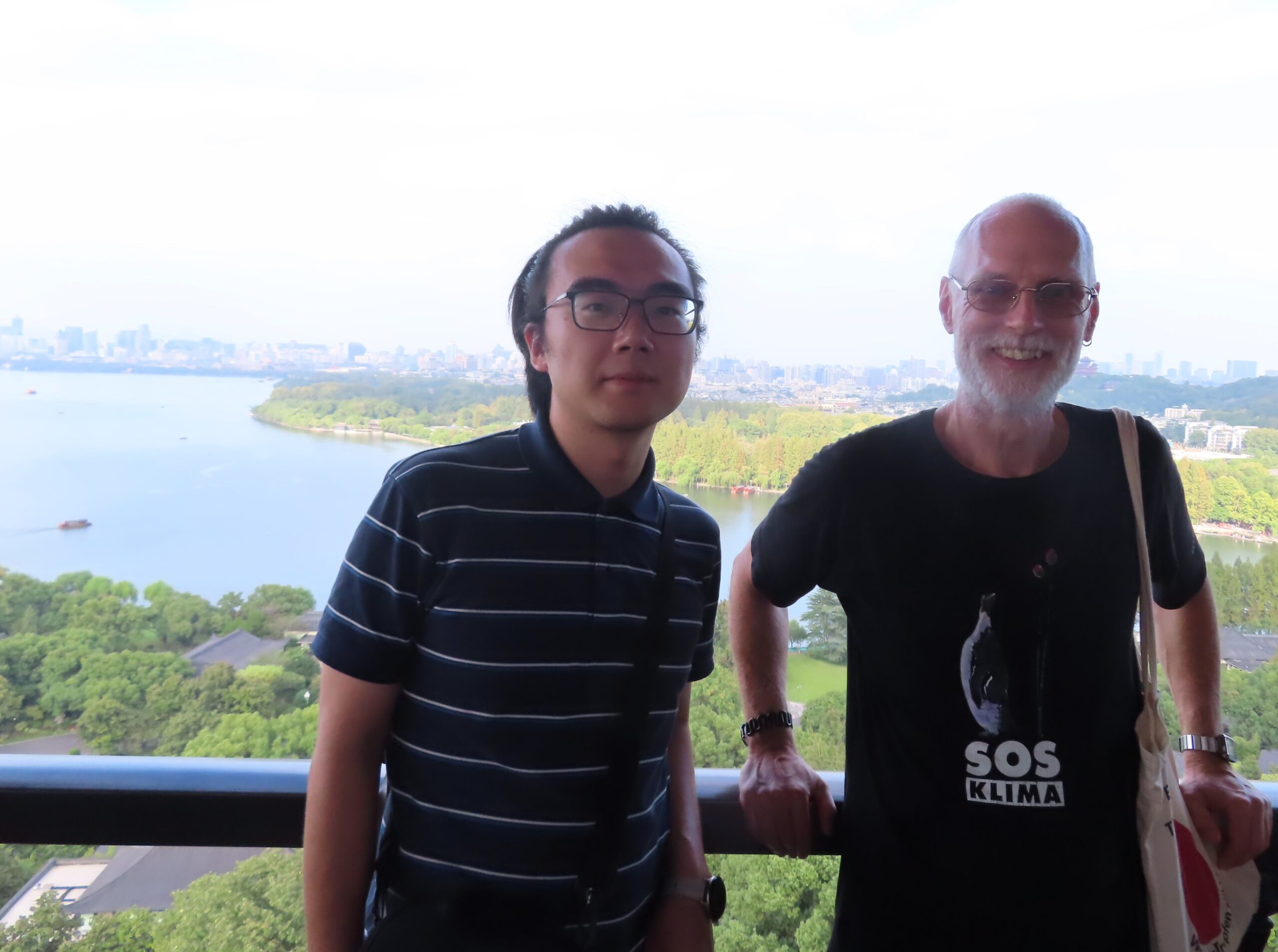
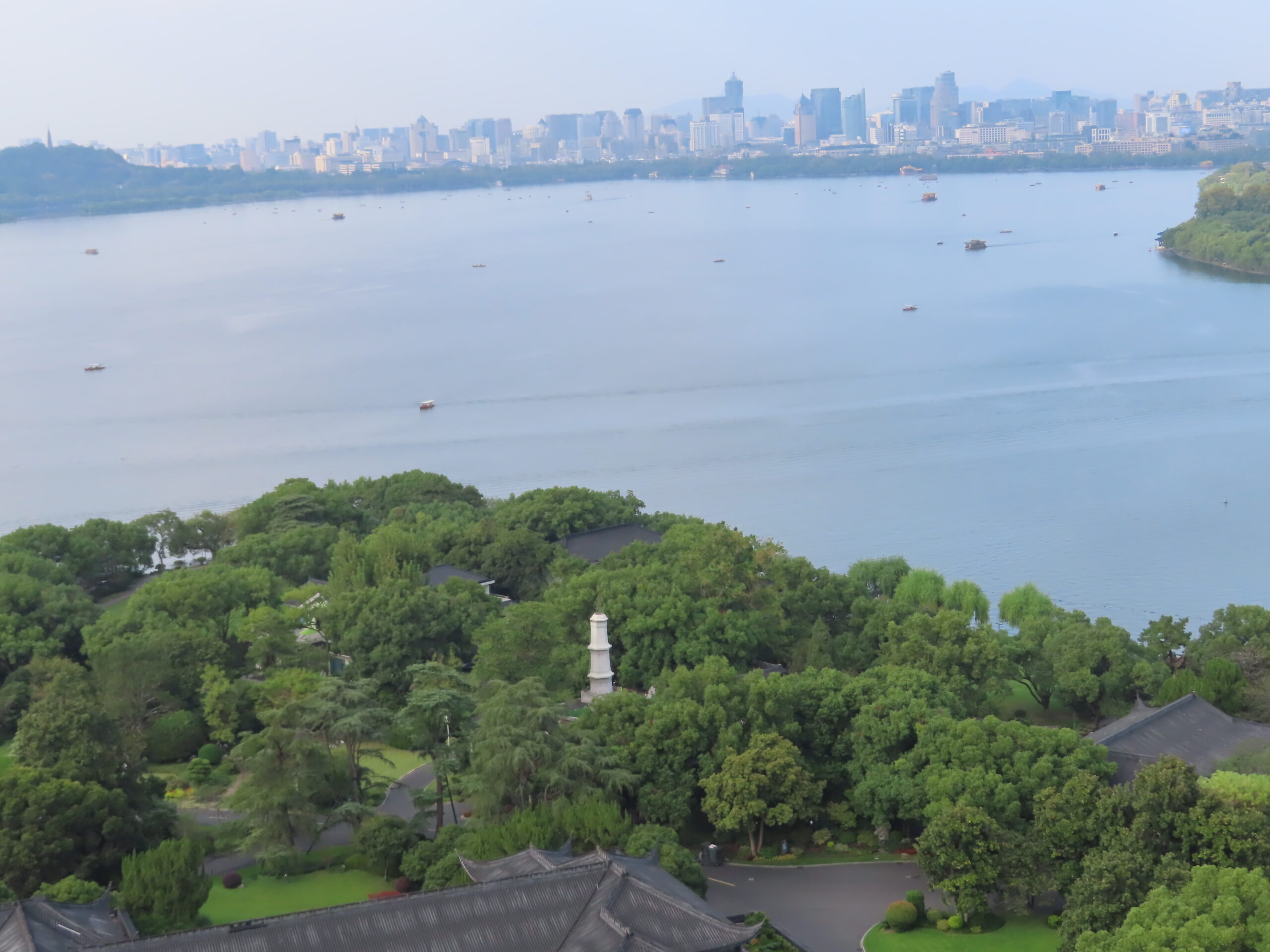
Han, Peter, and I started at a pagoda on West Lake and my struggles what to tell here and what to skip also start here, because both of them could tell so much about the historical and cultural background that what I remember alone would go beyond the scope. So, just a few highlights!


We walked along the Bai Causeway and crossed the lake by boat.
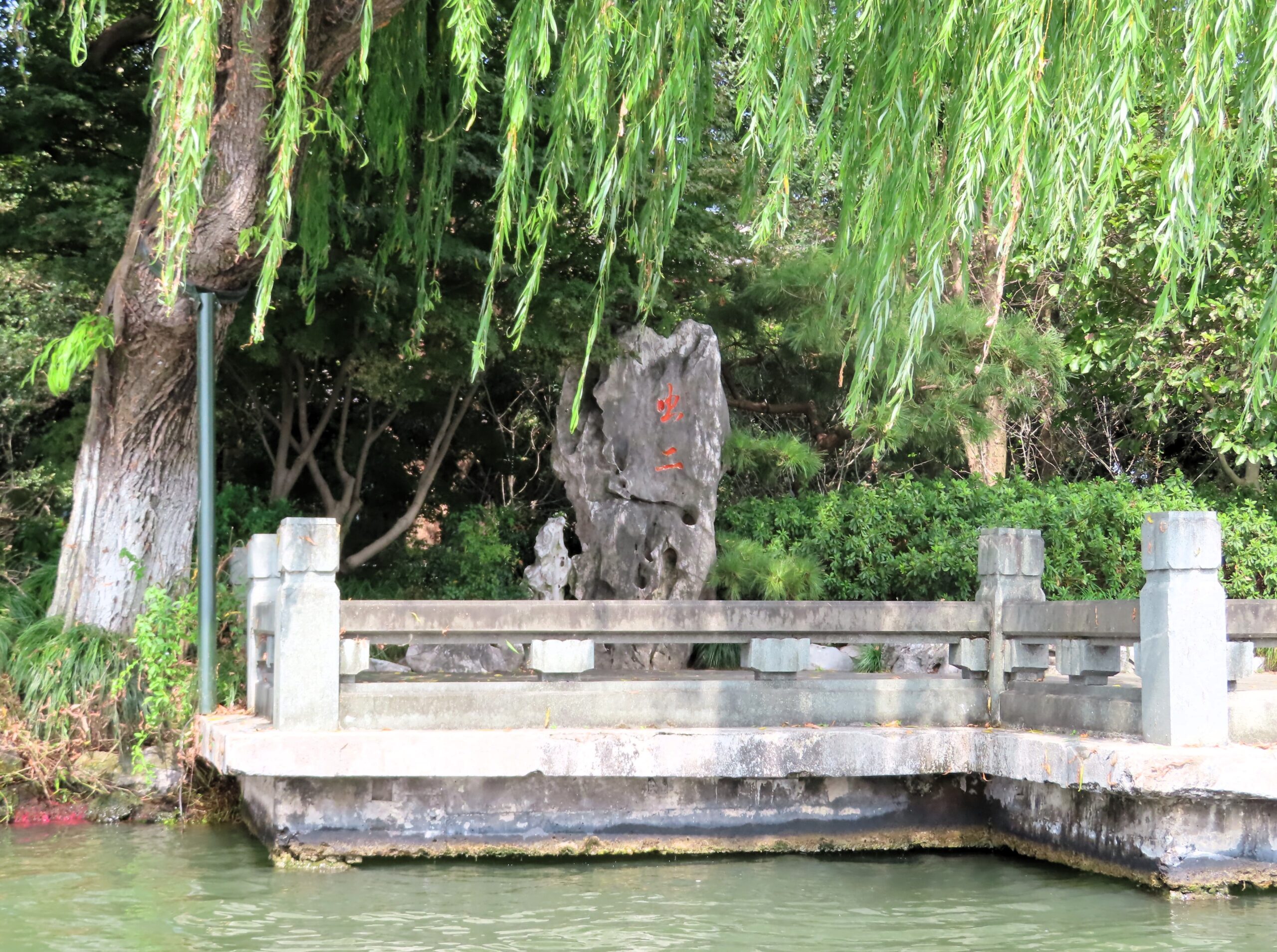
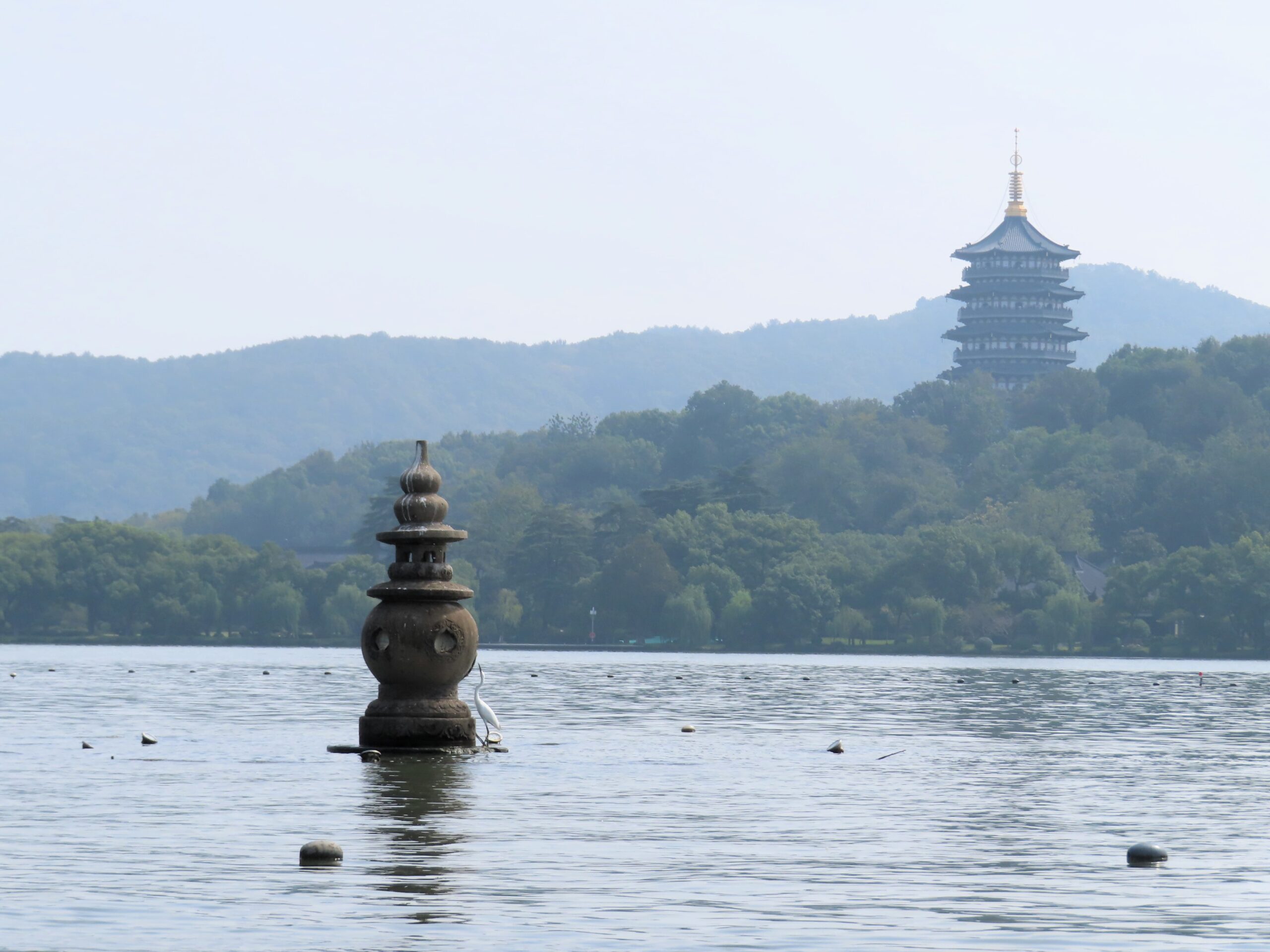
I’ll only mention a stone with a meaningful engraving and three small pagodas in the water.
Both have symbolic meanings. The mere engraving would just say “insect two” 虫二.
But the poet “and emporer) …. excluded the outer frame of two other characters …. and they say “….” (to be competed after consulting Han & Peter)
And the little pagodas are three (symbolic for complete) and have 5 holes to put wishes in and are also related to the story …(to be competed after consulting Han & Peter)
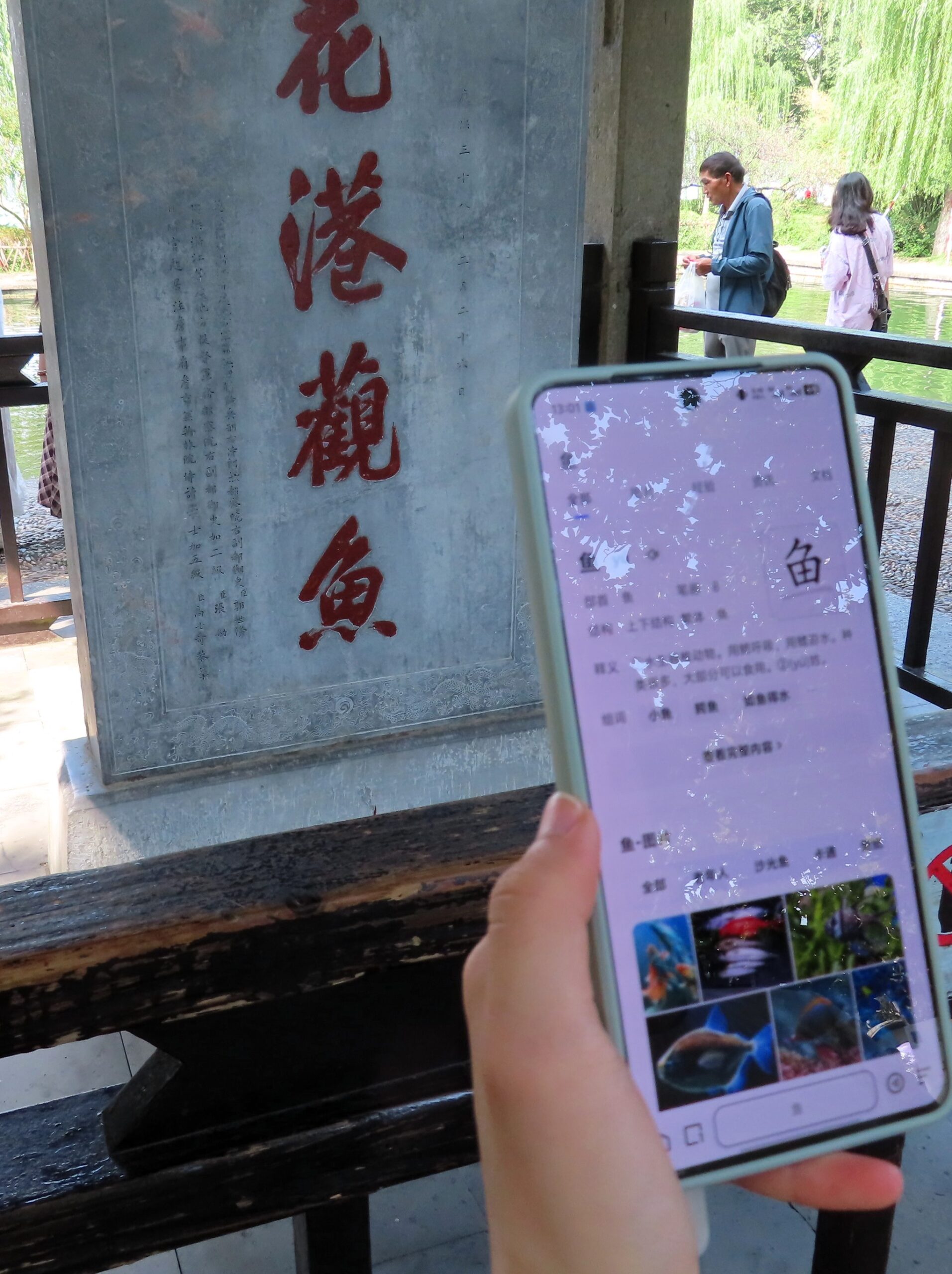

On the other side, we continued our cultural walk and had lunch before Peter and I visited the newly built Leifeng Pagoda. The pagoda had been burned down but eventually destroyed by the people themselves:


The “holy/magic”bricks were supposedly meant to prevent snakes from entering the house, so people took them piece by piece until the pagoda finally collapsed in 1924. For me, this symbolized the tension between society and the individual:
Everyone wants to take from the common good, and no one respects the boundaries before the collapse because that would mean others benefiting just because they were there earlier or were greedier. And no one wants to step back, no matter what the cost, for society or nature or wherever they want their share.
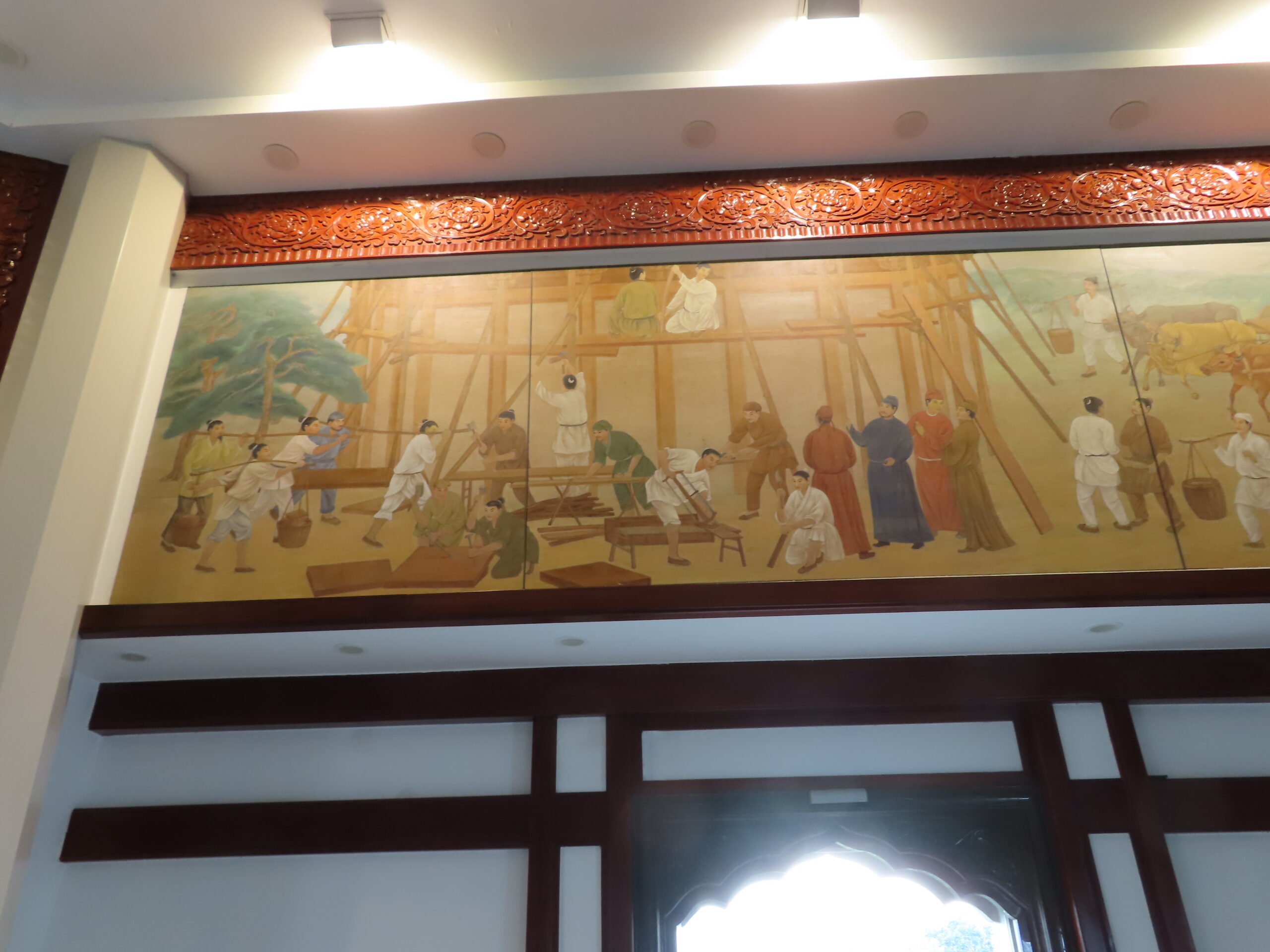
The pagoda, however, was rebuilt 2002, and in a special way:
They built a basic structure over some of the ruins of the original pagoda and built the new pagoda, practically floating above the old one.

Then we walked through Hefang Street, with its many shops, where we sampled delicious tea and pastries before having tea ourselves from a special shop. I also drank a sugarcane juice, which (or what else? Lunch?) later had a strong and urgent effect on me…
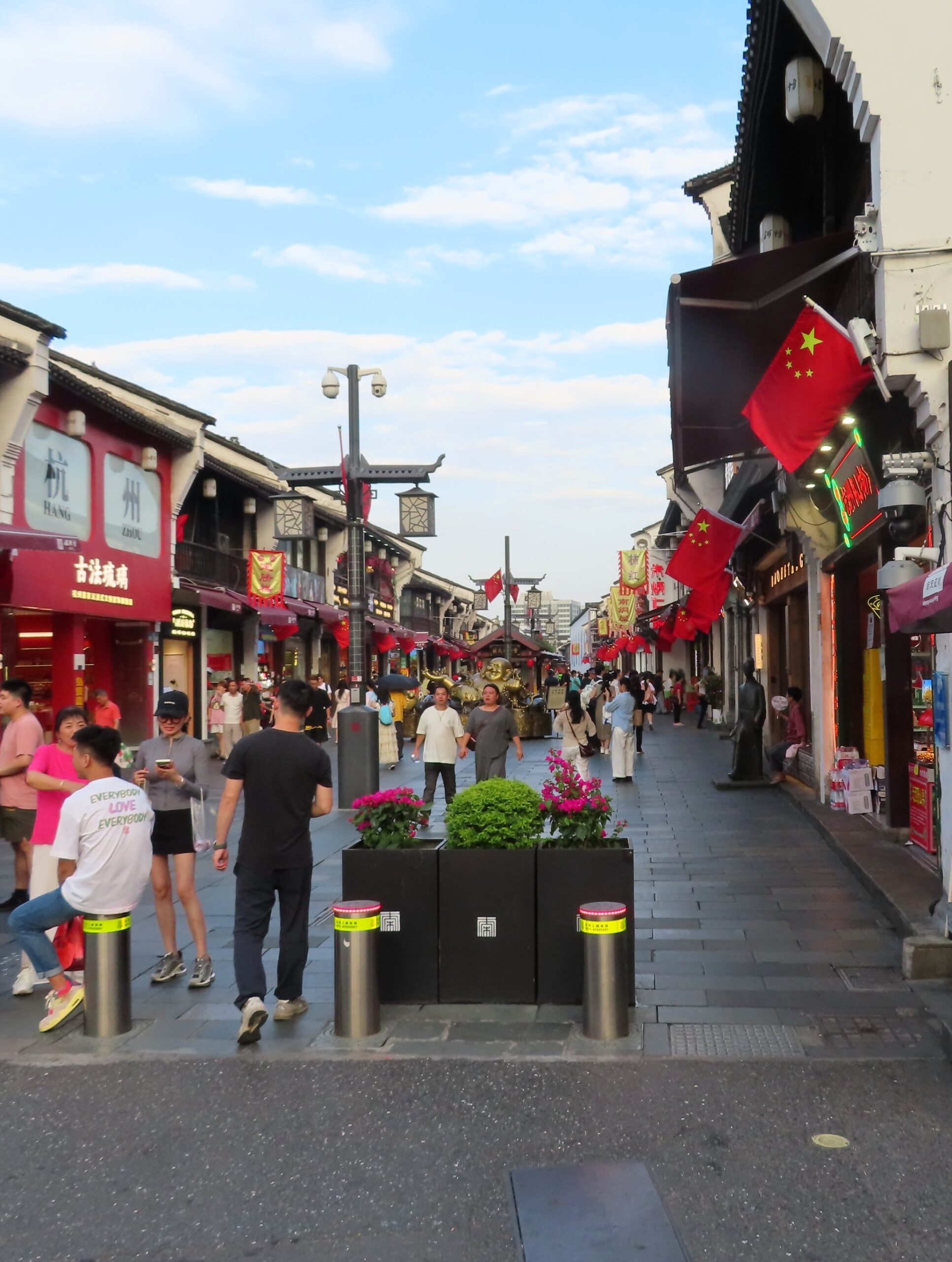

Hefang Street intersects Southern Song Imperial Street, which isn’t about singing mighty Southern songs, but about the Song Dynasty.
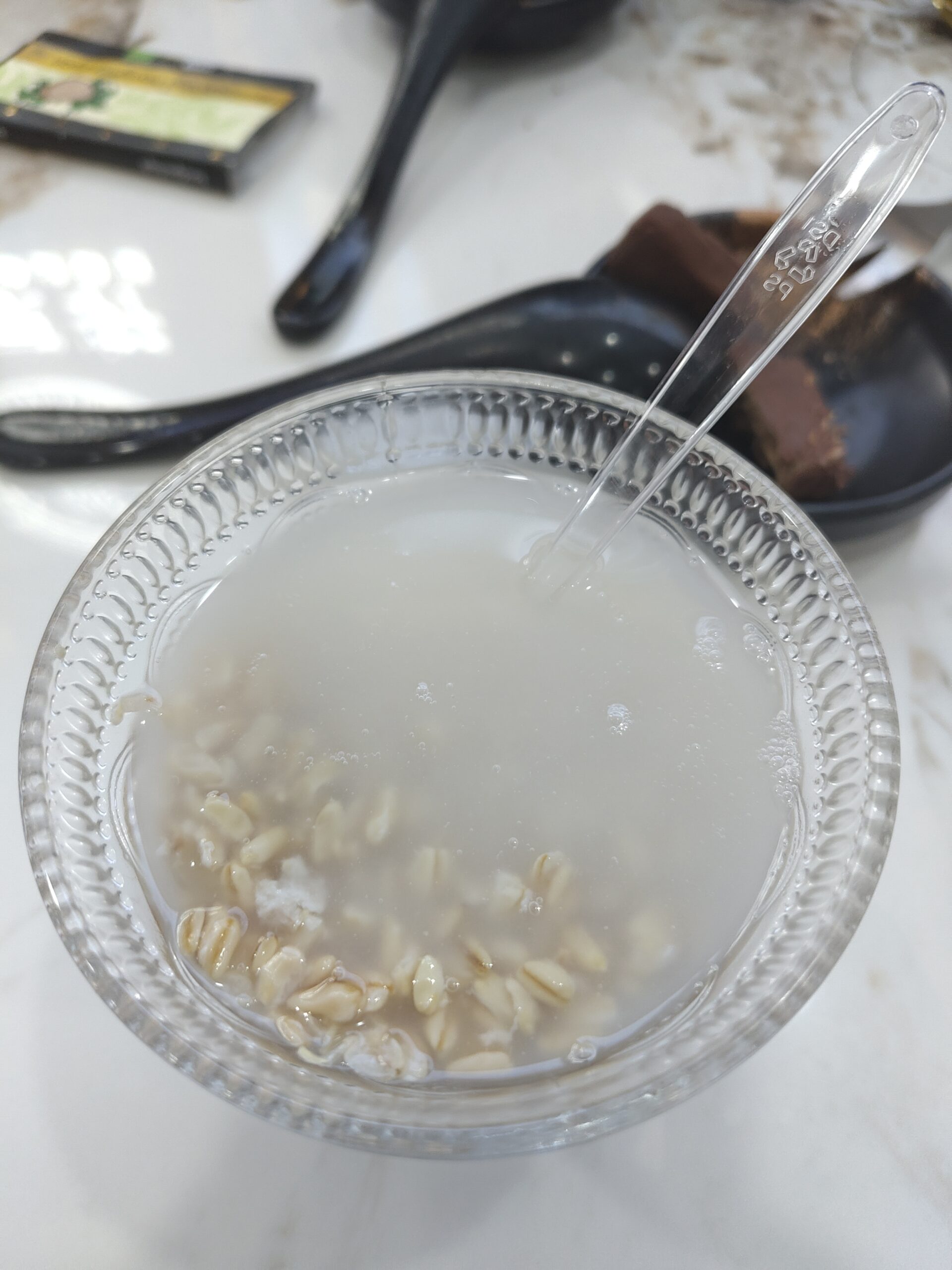
Afterwards, we sat down at a Muslim restaurant, ate a kind of fermented rice dessert, and tasted whether the Zotter chocolate from Vienna had survived the long journey with all the temperature fluctuations (which it did, quite well).
It was time to go home, and I had a big surprise at my hostel:
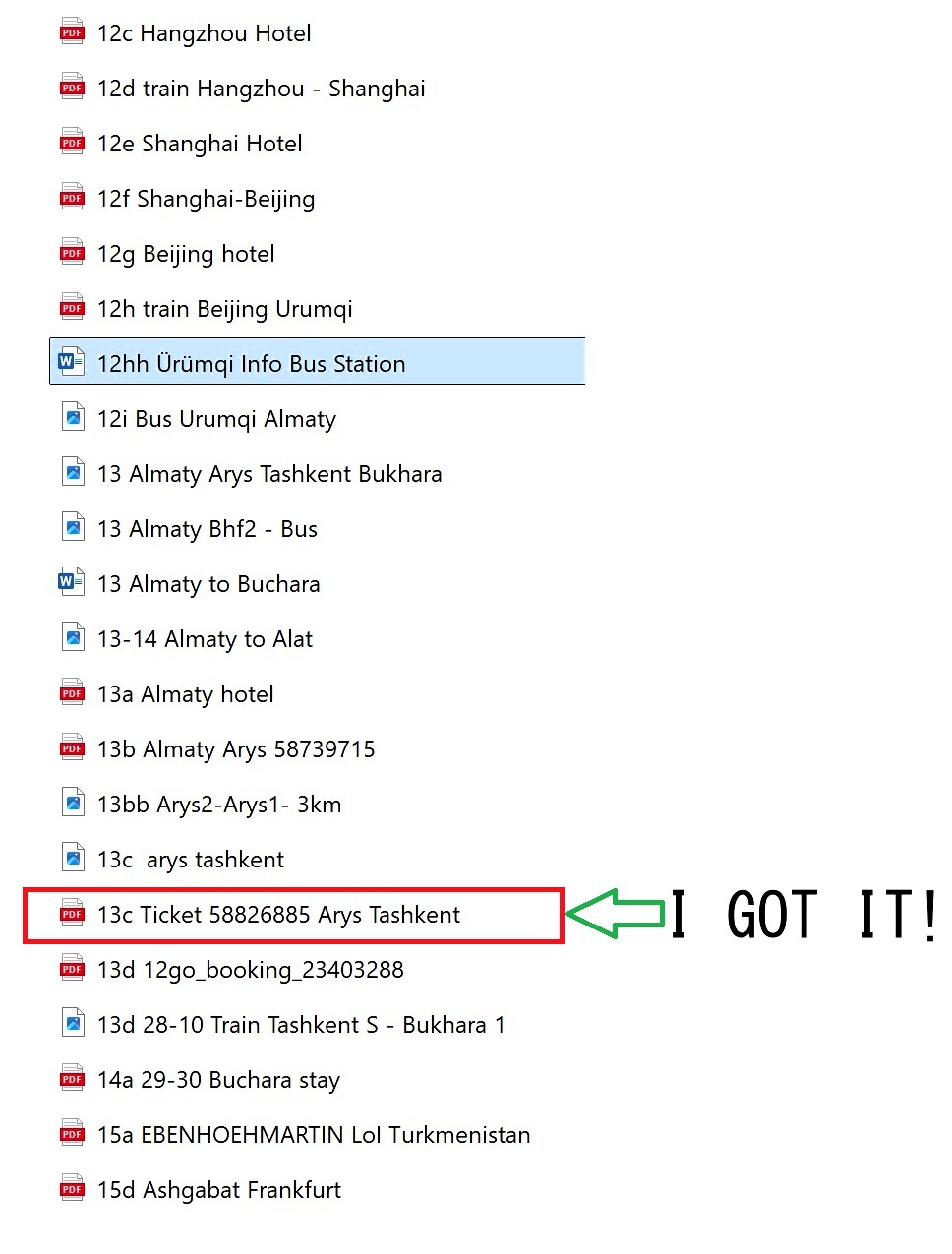
After the tutu.ru-disaster, I asked both them and the Kazakh railway why the Russians were selling tickets that couldn’t be found on the official website, and checked my email from time to time for an answer, but got no.
As a routine like every day twice I also tried to find “my” train on the Kazakh website – and now there it was!
With trembling fingers, I filled out the form, clicked “Pay,” paid, waited – and had a ticket!
I asked my sons to confirm this resulting PDF, but everything seemed to be fine!
Finally I can go! 😊
The Legend of the Bai She Zhuan tells of the immortal snake spirit. Bai Zi Niang (the “White Snake”) assumes human form to visit West Lake in Hangzhou and meet Xu Xian, whom Bai Zi Niang marries. Their young couple’s happiness could be so beautiful if the monk Fa Hai hadn’t suspected that Xu Xian’s wife was a snake spirit...
“For me, this symbolized the tension between society and the individual:
Everyone wants to take from the common good, and no one respects the boundaries before the collapse because that would mean others benefiting just because they were there earlier or were greedier. And no one wants to step back, no matter what the cost, for society or nature or wherever they want their share.”
–> route cause of so many problems; mankind is not developed yet properly towards common wellfare.